

Not Everything Can Make It (Pt. 3)
Some sprouts are just links to the next. Some are simply keeping alive the channel of trust.

Dear Reader, this is Part 3 in a four part series I’ve been writing about soil as a path of spiritual contemplation. These are written in quite a stream of consciousness way and it will help to read Part 1 and Part 2 first to get the full picture. I might share the beginnings of a new song I’m working on at the end of the series so stick around :)
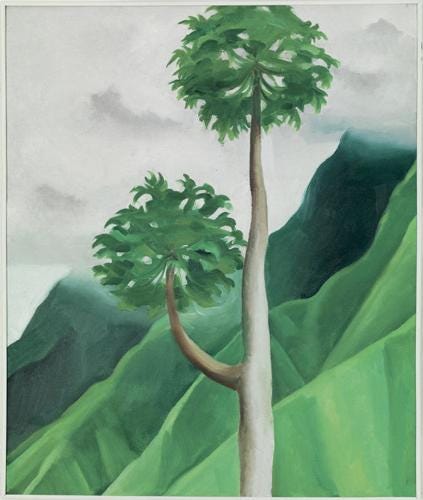
Not Everything Can Make It
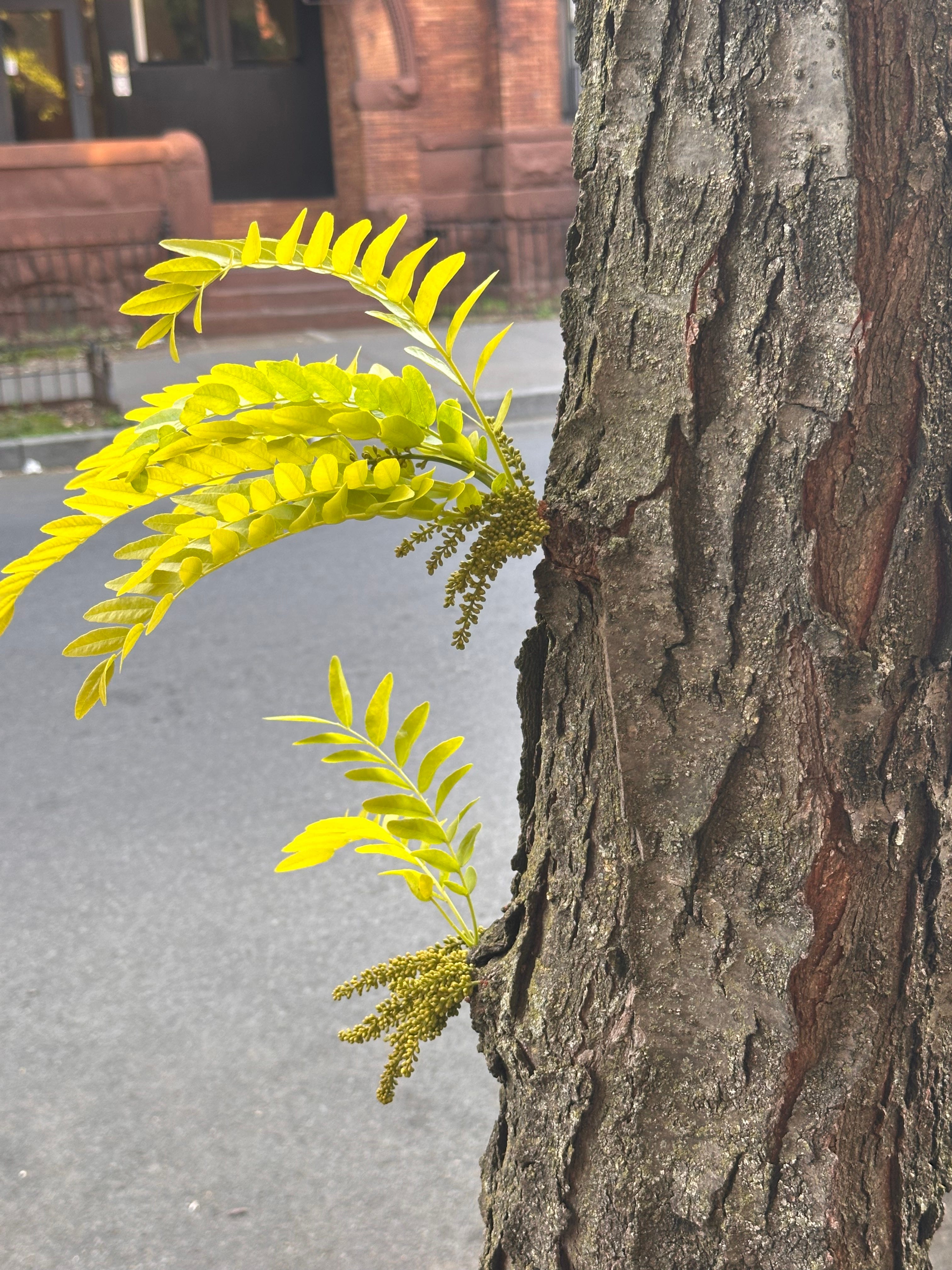
I told a story in our recent Koru gathering about a walk I took with my father in the redwoods last Christmas. I noticed many small shoots sticking out the side of the tree trunk and asked “will they all become big branches like the huge ones extending out at the top of the canopy?”
He said nonchalantly, “No, not everything can make it”.
I’ve always been so determined to catch every idea in the studio. I remember when making my third album, The Golden Echo, Thundercat would come into the studio and before he’d even started playing bass I’d hit record — I couldn’t bear to miss his first impression when he heard the song. I wanted that unfiltered response before he started thinking about it.
With my own ideas, I tend to lack the trust that they’ll come back to me if I don’t record them. But thinking about how this process occurs in Nature oddly calms me.
Not everything can make it.
Some of those fronds will grow into mighty branches, some won’t receive what they need to do so and they’ll drop off and go back into the soil. It’s just not their time.
So what? Are they any less beautiful for their short lifespan? Of course not.
It raises the question: what does it mean to ‘make it’? All I know is that, instead of feeling sad that those little shoots wouldn’t reach some idea of ‘full potential’, I instead felt a sense of peace that life has this sort of self-balancing instinct. It needs death to make life, so some parts of nature will be sacrificed to serve the larger vision.
This idea came back to me when I was spring cleaning my apartment months later and feeling the need to hold on to everything I had. I’m like this with food sometimes too — I can’t bear to waste anything. My Dad’s voice would pop up sometimes and say “Hey Kim, not everything can make it!” and I’d let go of the notion that by throwing it out I would be either deeming it unworthy or losing something innate to who I am. What if to let something go is to both to gain something and also assign it to a different role (going back into the soil)?
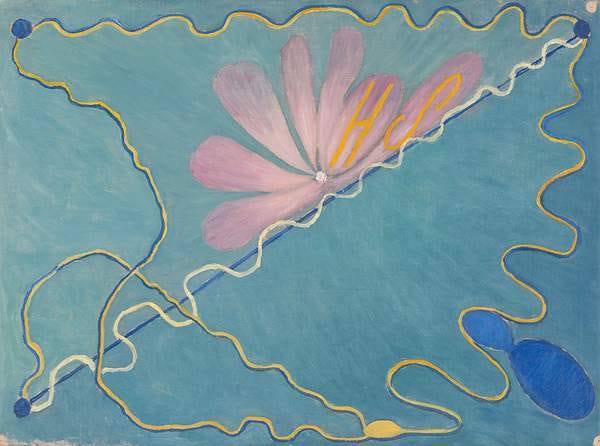
Not every frond becomes a flower.
Not every song seed becomes a song.
Some are just links to the next. Some are just keeping alive the channel of trust and intimacy. Some are just a contribution — even if, like the songwriting challenge that Jacob and I did (you can read more about that in Part 2) the contribution is only 11 seconds long and a bit shit. Jacob and I agreed that shitty songs were just as welcome as amazing ones.
Shit is BRILLIANT for the soil, by the way.
I’m learning to trust the contributions that are simply ‘good enough’ rather than demanding that they all be genius. In the last of this series I spoke about my move toward prioritizing intimacy (with both my creativity and my approach to prayer) over insight. I cannot control when and how insight emerges. I can only influence the conditions to encourage it. For me, the conditions for insight are intimacy.
Intimacy in the songwriting context can simply look like small offerings over a long period of time and a good deal of crop rotation as Joni Mitchell says. That means sometimes I paint, sometimes I write poems, sometimes I make songs. Sometimes I do none of those things and remember that even when I do nothing at all, the soil is still incubating, metabolizing, germinating and generating.
I am not the centrefold of it all and reality doesn’t revolve around me and what I do. What a blessed realization!
“The whole idea of compassion is based on a keen awareness of the interdependence of all these living beings, which are all part of one another, and all involved in one another.”
— Thomas Merton

I’ve been organizing all my lyric fragments into one master document recently. The process involved copying fragments of text from one note, pasting them into a new document, then repeating that with the next lot of words. The problem is that every time you hit Command C on something new, it wipes whatever was previously copied from the clipboard and replaces it with the new selection. While moving too fast through the process (classic Kimbra), instead of hitting Command V to paste the text I’d copied from the previous note, I pressed Command C again by mistake, which overrode the text I had planned to move over.
I probably lost about six pages of lyrics. Who knows what was in there — maybe the best stuff I’ve ever written. What could I do? There was literally no going back. I sat and felt my body freeze: judgement, self-attack, loss, disappointment, anger and then, as usual, the little friend I tend to find sitting at the bottom of all that: grief.
Not everything can make it.
I decided to take this as an opportunity to practise a small death. Can I trust that as a songwriter my best work is always ahead of me and not behind me? That whatever I lost is not really lost at all because if it was made manifest at one point, then it could very well find its way to the surface again in some other form? This seems to echo what physics tells us: that energy cannot be created or destroyed. So if the Word itself is energy, perhaps some idea from that note will come back in five years via a memory, a conversation, or a piece of art that reminds me of what I wrote.
What if I write it again in a way that is more refined and focused? Maybe that gives me the incentive to turn it into a song, instead of leaving it as a lonely abandoned Note file rotting on my computer? Of course, rotting is the ultimate act of creativity though… the soil will gladly take that, thank you very much!
I lost the initial insight, you could say, but what I got instead, was a new kind of intimacy with my soul as a place I could trust—the Ground of my Being. The soil that is not made barren by losing some seeds.
It brings to mind a Post-it note I’ve had on my mirror for the last four months, since my last silent retreat.
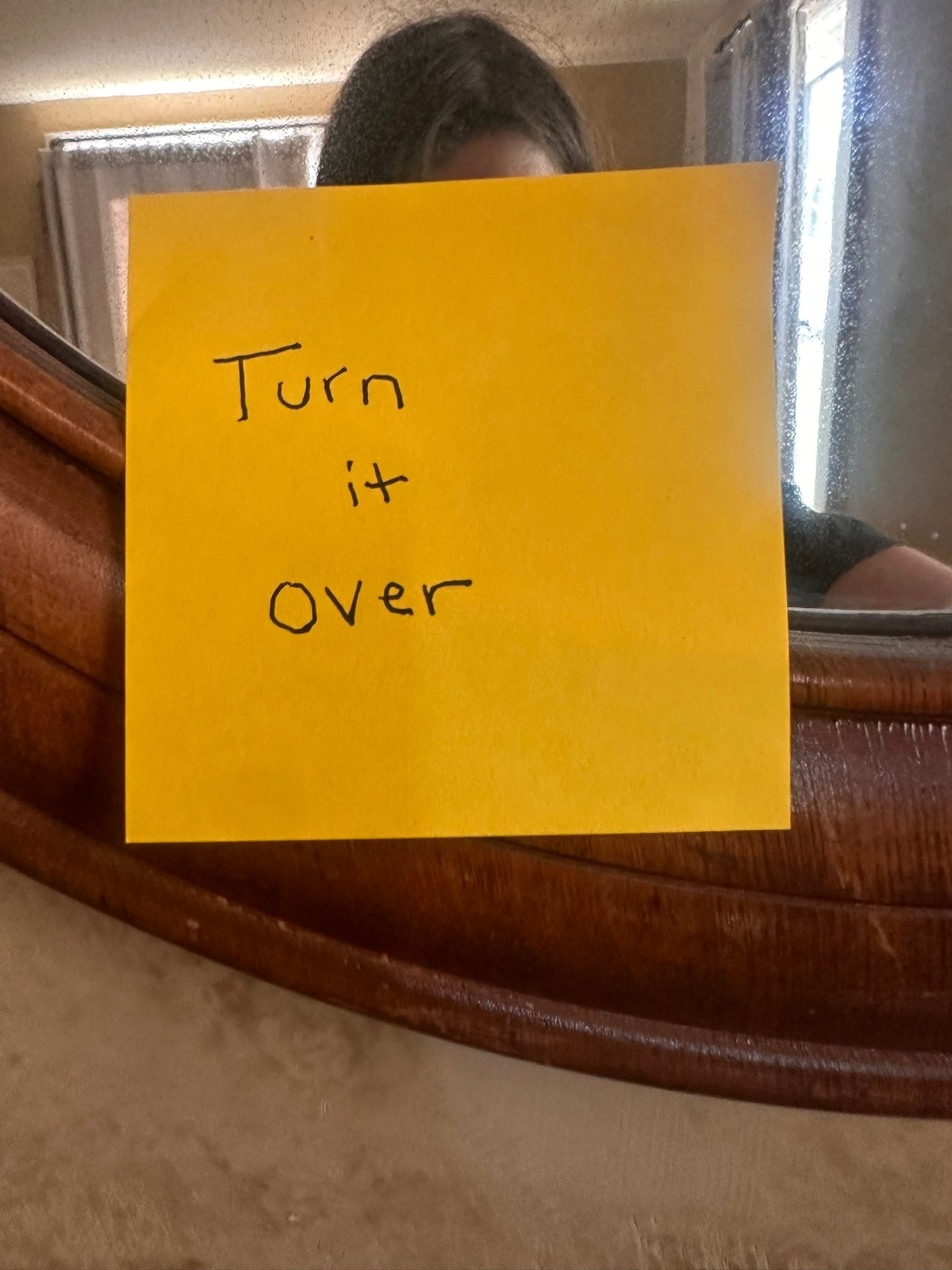
What if every choice we make in life is less of a landslide, a tectonic shift, a life-altering sweep full of harrowing consequences—and simply something we drop into the soil? Do it with care, certainly. The soil takes everything and does something with it. But once you turn it over, can you trust the purpose for which it will be used?
If what we fear is annihilation, can we look to the seed and remember what grows in its place once it surrenders its shell?
What would it be like to look at every acorn and simultaneously see the whole tree?
Because this is the reality. The conditions just haven’t played out long enough to reveal that full incarnation of its form. It is wired toward this destination and will reach it eventually, either through many cycles of decomposition and resurrection, or in fifty years if the environment supports it.
Either way, something strikes me as profound here—the acknowledgement of the innate divine potential of every living, and non-living, thing, regardless of whether it reaches that potential.
This is such a different mode from how we operate in our culture:
I love you IF you reach the potential I know is innate within you.
Rather than:
I love you FOR the potential that is innate within you.
The soil works more like the latter. This is the language of grace. I accept you for the potential you offer to this ecosystem. You don’t have to prove anything. You already belong because you’re here.
I saw how we were doing this within the Koru conversation. One person lit up another. We became a little mycelium network. It was less about any individual having the answer and more about a disposition of receptivity that acknowledged the potential for everyone to land on something useful to the group. For the simple reason that we are all living in bodies interacting with the world and its conditions.
What grows from a conversation is beyond our control, but this one was brimming with life. It didn’t need to prove or produce material to be worthwhile, just witnessing what it could grow was enough. Potential doesn’t mean it always becomes. It means it can become. Given certain conditions.
I think what made a spiritual teacher like Jesus such a radical figure was that he saw the innate potential of wholeness in everyone, regardless of who they were. But he also held the invitation to transformation as something we could choose. Wholeness wasn’t something that could only happen if a person was good, saved and pious—it was latent within. The work was helping other people see it.
Maybe Jesus wasn’t performing miracles in the external way we tend to think, but rather altering the ways of seeing in everyone around him. A shift of perspective. He restored a clear sense of sight where people had seen only brokenness.
The potential of the tree is in the acorn.
Therefore, the tree is in the acorn.
It is both acorn and tree. The only things that differentiate between these two manifestations are a) time—time must pass before we can see it become that—and b) the conditions to support that becoming.
Could it be that its desire for the form suggests the form already exists within it?
“A man’s physical hunger does not prove that that man will get any bread; he may die of starvation on a raft in the Atlantic. But surely a man’s hunger does prove that he comes of a race which repairs its body by eating and inhabits a world where eatable substances exist.”
— C.S. Lewis, The Weight of Glory

In Part 4, I will be turning to Rudolf Steiner for his thoughts on all this and sharing the seed of a new song with you… inspired by the soil!
As we approach the final part of this series, I wonder, what’s been growing in you?
Till then,

“Shit is brilliant for soil…” Thank you for stating this 😂
You know what I love about Kimbra the artist? It’s the child-like mentality and honesty towards your work. Whether it’s playing with your audio gears on the stage or mumbling what goes on in your head on substack. It’s exactly like a kid is just playing in a park. So much fun to watch! Go for it: in order to live, die everyday 😜